 | TODAY IN SCIENCE HISTORY NEWSLETTER - 3 JANUARY |
| Book of the Day | ||
|
| Quotations for Today | |
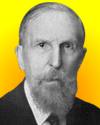 | After a duration of a thousand years, the power of astrology broke down when, with Copernicus, Kepler, and Galileo, the progress of astronomy overthrew the false hypothesis upon which the entire structure rested, namely the geocentric system of the universe. The fact that the earth revolves in space intervened to upset the complicated play of planetary influences, and the silent stars, related to the unfathomable depths of the sky, no longer made their prophetic voices audible to mankind. Celestial mechanics and spectrum analysis finally robbed them of their mysterious prestige. - Franz Cumont, Belgian archaeologist and philologist (born 3 Jan 1868).  |
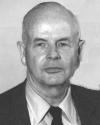 | The year 1918 was the time of the great influenza epidemic, the schools were closed. And this was when, as far as I can remember, the first explicitly strong interest in astronomy developed ... I took a piece of bamboo, and sawed a piece in the middle of each end, to put a couple of spectacle lenses in it. Well, the Pleiades looked nice because the stars were big. I thought I was looking at stars magnified. Well, they weren�t. It was a little thing with two lenses at random on each end, and all you got were extra focal images, big things, but I thought I was looking at star surfaces. I was 12 years old. - William Wilson Morgan, American astronomer (born 3 Jan 1906). |
| | Mathematics, as much as music or any other art, is one of the means by which we rise to a complete self-consciousness. The significance of mathematics resides precisely in the fact that it is an art; by informing us of the nature of our own minds it informs us of much that depends on our minds. - Antoine-Thomson d' Abbadie, French geographer (born 3 Jan 1810). |
| Quiz | |
| Before you look at today's web page, see if you can answer some of these questions about the events that happened on this day. Some of the names are very familiar. Others will likely stump you. Tickle your curiosity with these questions, then check your answers on today's web page. | |
| Births | |
| | On 3 Jan 1906, William Wilson Morgan was born, an American astronomer who provided the first evidence of the shape of the Milky Way Galaxy (1951). With Keenan and Kellman, he introduced stellar luminosity classes and the two-dimensional classification of stellar spectra strictly based on the spectra themselves. With Osterbrock and Sharpless he demonstrated the shape of the Galaxy using precise distances of O and B stars obtained from spectral classifications. What shape for the Milky Way Galaxy did his evidence provide? What shape for the Milky Way Galaxy did his evidence provide? |
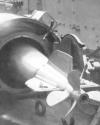 | Robert Whitehead, born 3 Jan 1823, was a British engineer who invented the modern form of a certain weapon. By 1870, he had developed it in a useful form, and the British government purchased his invention the following year. Edison made a movie of the weapon being demonstrated in 1900. What was the weapon he developed? |
| Deaths | |
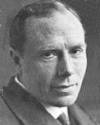 | Reginald Punnet (1875-1967) devised the “Punnett Square” for which he remains known. His interest in natural science began as a child, while afflicted by appendicitis, when he read a series of books on biology that his father had bought. During World War I, Punnett developed a technique of separating chicks using sex-linked plumage colours to select the more useful male chicks. For what is the Punnett Square used? |
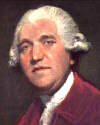 | An English inventor, artist and potter (1730-1795) placed the manufacture of stoneware on a scientific basis, and founded the potteries of North Staffordshire. The agateware and unglazed blue or green stoneware he decorated with white neo-classical designs, used pigments he invented. He designed machinery and kilns. For his invention of a pyrometer for measuring high temperatures, he was made a fellow of the Royal Society. What is the name of this famous maker of pottery? |
| Events | |
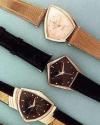 | On 3 Jan of a certain year, the world's first electric watch was introduced in Lancaster, Pennsylvania, by the Hamilton Watch Company. The idea of a watch which never needed winding was very exciting to consumers, and its popularity was enhanced by a number of very dramatic case styles with non-traditional asymmetrical styling. In which decade were the world's first electric watches introduced? |
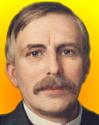 | On 3 Jan 1919, Ernest Rutherford first accomplished the artificial transmutation of an element. By bombarding atoms of a certain element with alpha particles emitted by radioactive materials he transmuted some of these atoms into another element. What was the element with which he began, and what element resulted? |
| Answers |
| When you have your answers ready to all the questions above, you'll find all the information to check them, and more, on the January 3 web page of Today in Science History. Or, try this link first for just the brief answers. Fast answers for the previous newsletter for January 2: biochemistry • niobium • pendulum • stratosphere • decade including the year 1959 • John Roebling. |
| Feedback |
 If you enjoy this newsletter, the website, or wish to offer encouragement or ideas, please send feedback by using your mail reader Reply button. If you enjoy this newsletter, the website, or wish to offer encouragement or ideas, please send feedback by using your mail reader Reply button. Your click on a StumbleUpon, Google+ or Facebook social button on the site webpages is also a welcome sign of appreciation. Thank you for using them. |
| Copyright |
| To find citations for quotations go to the corresponding webpage by clicking on the “quotes” balloon icon. Sources for the thumbnails appear on today's webpage with the corresponding item. � This newsletter is copyright 2013 by todayinsci.com. Please respect the Webmaster's wishes and do not put copies online of the Newsletter � or any Today in Science History webpage. (If you already have done so, please remove them. Thank you.) Offline use in education is encouraged such as a printout on a bulletin board, or projected for classroom viewing. Online, descriptive links to our pages are welcomed, as these will provide a reader with the most recent revisions, additions and/or corrections of a webpage. For any other copyright questions, please contact the Webmaster by using your mail reader Reply button. |
--
If you do not want to receive any more newsletters, Unsubscribe
To update your preferences and to unsubscribe visit this link


Δεν υπάρχουν σχόλια:
Δημοσίευση σχολίου