 | TODAY IN SCIENCE HISTORY NEWSLETTER - 7 JANUARY |
| Feature for Today |
| On 7 Jan 1714, the world's first patent for a “Machine for Transcribing Letters” was granted in England by Queen Anne to Henry Mill (1683?-1771), a waterworks engineer with the New River Company. The record of the patent is all the information that has survived to the present, so you can read British Patent 395 of 1714 and wonder what it might have been. The web page also includes his earlier patent for “Springs for Coaches, Chariots, and Other Vehicles,” in 1706. |
| Book of the Day | ||
|

| Quotations for Today | |
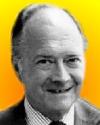 | Furious activity is no substitute for analytical thought. - Sir Alastair Pilkington, British industrialist and inventor (born 7 Jan 1920).  |
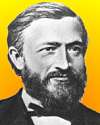 | Chemistry is the dirty part of physics. - Johann Philipp Reis, German physicist (born 7 Jan 1834). |
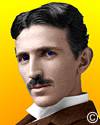 | If he [Thomas Edison] had a needle to find in a haystack, he would not stop to reason where it was most likely to be, but would proceed at once with the feverish diligence of a bee, to examine straw after straw until he found the object of his search. � [J]ust a little theory and calculation would have saved him ninety percent of his labor. - Nikola Tesla, Serbian-American electrical engineer and inventor (died 7 Jan 1943). |
 | If you don't work on important problems, it's not likely that you'll do important work. - Richard Hamming, American computer scientist and mathematician (died 7 Jan 1998). |
| Quiz | |
| Before you look at today's web page, see if you can answer some of these questions about the events that happened on this day. Some of the names are very familiar. Others will likely stump you. Tickle your curiosity with these questions, then check your answers on today's web page. | |
| Births | |
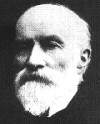 | Sir Sandford Fleming, born 7 Jan 1827, was a Scottish surveyor and engineer who divided the world into time zones. He emigrated at age 17 years to Quebec, Canada as a surveyor. His idea of time zones, which led to the adoption of the present system of time zones earned him the title of “Father of Standard Time.” Fleming also designed the first Canadian postage stamp. Issued in 1851, it cost three pennies and depicted the beaver, now the national animal of Canada. For what business did he create the idea of time zones? For what business did he create the idea of time zones? |
| | Sir Lionel Alexander Bethune Pilkington was a British industrialist and inventor who invented a new manufacturing method that much improved the industrial production of a certain glass product. His innovation improved the production of which glass product? |
| Deaths | |
| John Motley Morehead III (1870-1965) was an American chemist much involved in the commercial production of calcium carbide. This is an interesting chemical because both the carbon and the calcium come from inorganic rock (coal and limestone). Yet it immediately reacts with water to yield a product that is the important starting point for the syntheses of very many organic chemicals. What is the important product from the reaction of calcium carbide and water? | |
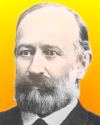 | Josef Stefan (1835-1893) was an Austrian physicist who in 1879 formulated a law that the radiant energy of a black body is proportional to the fourth power of its absolute temperature. His law was one of the first important steps toward the understanding of blackbody radiation. What is defined as a “black body” in this law? |
| Events | |
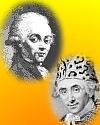 | On 7 Jan 1785, Frenchman Jean Pierre Blanchard, with American physician and scientist John Jeffries, made the first international flight in a hot-air balloon. Across which body of water was this balloon flight made? |
 | On 7 Jan 1930, a new element was discovered by Marguerite Perey, the last naturally occurring element to be found. Mendeleev anticipated its discovery, and provisionally named it eka-cesium. Perey coine the name by which we now know it. What element was this element discovered by Marguerite Perey? |
| Answers |
| When you have your answers ready to all the questions above, you'll find all the information to check them, and more, on the January 7 web page of Today in Science History. Or, try this link first for just the brief answers. Fast answers for the previous newsletter for January 6: a sheep, a duck and a rooster • light is emitted by the electrons • pea plants • decade including the year 1971 • Leon Foucault with a pendulum. |
| Feedback |
 If you enjoy this newsletter, the website, or wish to offer encouragement or ideas, please send feedback by using your mail reader Reply button. If you enjoy this newsletter, the website, or wish to offer encouragement or ideas, please send feedback by using your mail reader Reply button. Your click on a StumbleUpon, Google+ or Facebook social button on the site webpages is also a welcome sign of appreciation. Thank you for using them. |
| Copyright |
| To find citations for quotations go to the corresponding webpage by clicking on the “quotes” balloon icon. Sources for the thumbnails appear on today's webpage with the corresponding item. � This newsletter is copyright 2013 by todayinsci.com. Please respect the Webmaster's wishes and do not put copies online of the Newsletter � or any Today in Science History webpage. (If you already have done so, please remove them. Thank you.) Offline use in education is encouraged such as a printout on a bulletin board, or projected for classroom viewing. Online, descriptive links to our pages are welcomed, as these will provide a reader with the most recent revisions, additions and/or corrections of a webpage. For any other copyright questions, please contact the Webmaster by using your mail reader Reply button. |
--
If you do not want to receive any more newsletters, Unsubscribe
To update your preferences and to unsubscribe visit this link


Δεν υπάρχουν σχόλια:
Δημοσίευση σχολίου