 | TODAY IN SCIENCE HISTORY NEWSLETTER - 11 APRIL |
| Feature for Today |
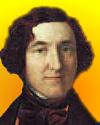 On 11 Apr 1798, Macedonio Melloni was born, an Italian physicist who was the first to extensively research infrared radiation. On 11 Apr 1798, Macedonio Melloni was born, an Italian physicist who was the first to extensively research infrared radiation.In a work that evolved from a Dissertation prefixed to the eighth edition of the Encyclop�dia Britannica, James David Forbes wrote a comprehensive book as A Review of the Progress of Mathematical and Physical Science (1858), covering particularly between the years 1775 and 1850. Thus the author wrote with contemporary knowledge of Melloni, who died in 1854. In this extract, Macedonio Melloni - Transmission and Refraction of Heat, you can read of his experiments. Of course, the heat sources he used were supplying what we know as infrared radiation that's part of the electromagnetic spectrum. Melloni was only on the leading edge of discovering the wave-like properties of radiant heat. If Melloni occupies a niche in history you have never visited before, you'll enjoy this short article. |
| Book of the Day | |
| |

| Quotations for Today | |
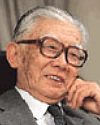 | "The key to success for (my company)*, and to everything in business, science and technology for that matter, is never to follow the others." * company name in quiz below. - Masaru Ibuka, Japanese electronics engineer (born 11 Apr 1908)  |
 | "It is the destiny of wine to be drunk, and it is the destiny of glucose to be oxidized. But it was not oxidized immediately: its drinker kept it in his liver for more than a week, well curled up and tranquil, as a reserve aliment for a sudden effort; an effort that he was forced to make the following Sunday, pursuing a bolting horse. Farewell to the hexagonal structure: in the space of a few instants the skein was unwound and became glucose again, and this was dragged by the bloodstream all the way to a minute muscle fiber in the thigh, and here brutally split into two molecules of lactic acid, the grim harbinger of fatigue: only later, some minutes after, the panting of the lungs was able to supply the oxygen necessary to quietly oxidize the latter. So a new molecule of carbon dioxide returned to the atmosphere, and a parcel of the energy that the sun had handed to the vine-shoot passed from the state of chemical energy to that of mechanical energy, and thereafter settled down in the slothful condition of heat, warming up imperceptibly the air moved by the running and the blood of the runner. 'Such is life,' although rarely is it described in this manner: an inserting itself, a drawing off to its advantage, a parasitizing of the downward course of energy, from its noble solar form to the degraded one of low-temperature heat. In this downward course, which leads to equilibrium and thus death, life draws a bend and nests in it." - Primo Levi, Italian chemist and writer (died 11 Apr 1987) |
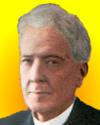 | "Several of my young acquaintances are in their graves who gave promise of making happy and useful citizens and there is no question whatever that cigarettes alone were the cause of their destruction. No boy living would commence the use of cigarettes if he knew what a useless, soulless, worthless thing they would make of him." - Luther Burbank, American naturalist and horticulturalist (died 11 Apr 1926) |
| QUIZ | |
| Before you look at today's web page, see if you can answer some of these questions about the events that happened on this day. Some of the names are very familiar. Others will likely stump you. Tickle your curiosity with these questions, then check your answers on today's web page. | |
| Births | |
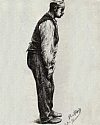 |  An English physician, born 11 Apr 1755, was first to recognize a burst appendix as a cause of death, wrote the first scientific article on appendicitis (1812), but it was the neuromuscular disease he described in his Essay on the Shaking Palsy (1817), for which he is remembered, for it is known by his name. An English physician, born 11 Apr 1755, was first to recognize a burst appendix as a cause of death, wrote the first scientific article on appendicitis (1812), but it was the neuromuscular disease he described in his Essay on the Shaking Palsy (1817), for which he is remembered, for it is known by his name.  Can you name this physician? Can you name this physician? |
 | Masaru Ibuka, born 11 Apr 1908, was a Japanese electronics pioneer who co-founded a small post-war radio-repair company that grew into a manufacturer that changed the Japanese electronics industry from simply copying Western products to innovation with their own electronic products. What is the name of this manufacturer? |
| Deaths | |
 |  Samuel Heinrich Schwabe (1875-1789) was a German astronomer whose near daily observations of the sun revealed the sunspot activity cycle (1842) whereby there is a periodicity to the number of sunspots visible on the solar disc. He also made the the first known detailed drawing of the Great Red Spot on Jupiter (1831) How many years are there in the sunspot cycle he discovered? Samuel Heinrich Schwabe (1875-1789) was a German astronomer whose near daily observations of the sun revealed the sunspot activity cycle (1842) whereby there is a periodicity to the number of sunspots visible on the solar disc. He also made the the first known detailed drawing of the Great Red Spot on Jupiter (1831) How many years are there in the sunspot cycle he discovered? |
| Events | |
 |  On 11 Apr 1970, the third manned lunar landing mission was launched from Cape Canaveral. Two days later, a liquid oxygen tank exploded, disabling the normal supply of oxygen, electricity, light, and water. Swigert reported: "Houston, we've had a problem." The lunar landing was aborted. After circling the moon, the crippled spacecraft began a difficult return to Earth. What was the name of this spacecraft? What was the name of the mission? On 11 Apr 1970, the third manned lunar landing mission was launched from Cape Canaveral. Two days later, a liquid oxygen tank exploded, disabling the normal supply of oxygen, electricity, light, and water. Swigert reported: "Houston, we've had a problem." The lunar landing was aborted. After circling the moon, the crippled spacecraft began a difficult return to Earth. What was the name of this spacecraft? What was the name of the mission? |
 | On 11 Apr of a certain year, the U.S. Navy acquired its first submarine that was propelled by gasoline while on the surface and by electricity when submerged. The 53-foot craft, designed by Irish immigrant John P. Holland, served as a blueprint for modern submarine design. In which decade did the U.S. Navy acquire its first modern submarine? |
| Answers |
When you have your answers ready to all the questions above, you'll find all the information to check them, and more, on the April 11 web page of Today in Science History. Or, try this link first for just the brief answers. Fast answers for the previous newsletter for April 10: anti-malarial drug; aluminium; the 4x4 arrangement of 15 square numbered tiles in a tray that must be reordered by sliding one tile at a time into the vacant space; seventeenth (1633); the decade including the year 1972. |
| Feedback |
 If you enjoy this newsletter, the website, or wish to offer encouragement or ideas, please send feedback by using your mail reader Reply button. If you enjoy this newsletter, the website, or wish to offer encouragement or ideas, please send feedback by using your mail reader Reply button. |
--
If you do not want to receive any more newsletters, Unsubscribe
To update your preferences and to unsubscribe visit this link


Δεν υπάρχουν σχόλια:
Δημοσίευση σχολίου