 | TODAY IN SCIENCE HISTORY NEWSLETTER - 8 APRIL |
| Feature for Today |
| |
| Book of the Day | |
| |

| Quotations for Today | |
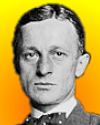 | "A physician is obligated to consider more than a diseased organ, more than even the whole man—he must view the man in his world." - Harvey Cushing, American neurosurgeon (born 8 Apr 1869)  |
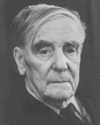 | "The year that Rutherford died (1938 [sic]) there disappeared forever the happy days of free scientific work which gave us such delight in our youth. Science has lost her freedom. Science has become a productive force. She has become rich but she has become enslaved and part of her is veiled in secrecy. I do not know whether Rutherford would continue to joke and laugh as he used to." - Pyotr Leonidovich Kapitsa, Soviet physicist (died 8 Apr 1984) |
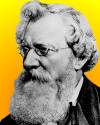 | "People have wracked their brains for an explanation of benzene and how the celebrated man (Kekul�) managed to come up with the concept of the benzene theory. With regard to the last point especially, a friend of mine who is a farmer and has a lively interest in chemistry has asked me a question which I would like to share with you. My 'agricultural friend' apparently believes he has traced the origins of the benzene theory. 'Has Kekul�,' so ran the question, 'once been a bee-keeper? You certainly know that bees too build hexagons; they know well that they can store the greatest amount of honey that way with the least amount of wax. I always liked it,' my agricultural friend went on, 'When I received a new issue of the Berichte; admittedly, I don't read the articles, but I like the pictures very much. The patterns of benzene, naphthalene and especially anthracene are indeed wonderful. When I look at the pictures I always have to think of the honeycombs of my bee hives.'" - August Wilhelm von Hofmann, German chemist (born 8 Apr 1818) |
| QUIZ | |
| Before you look at today's web page, see if you can answer some of these questions about the events that happened on this day. Some of the names are very familiar. Others will likely stump you. Tickle your curiosity with these questions, then check your answers on today's web page. | |
| Births | |
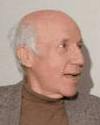 |  Melvin Calvin, born 8 Apr 1911, was an American biochemist who his elucidated the mechanism by which carbon dioxide is incorporated into green plants, for which he received the 1961 Nobel Prize for Chemistry. In the Calvin Cycle, he described the "dark reactions" of photosynthesis occuring through the night turning carbon dioxide into sugar. Melvin Calvin, born 8 Apr 1911, was an American biochemist who his elucidated the mechanism by which carbon dioxide is incorporated into green plants, for which he received the 1961 Nobel Prize for Chemistry. In the Calvin Cycle, he described the "dark reactions" of photosynthesis occuring through the night turning carbon dioxide into sugar.  What technique did he use to follow the carbon atoms from carbon dioxide to their part in sugars? What technique did he use to follow the carbon atoms from carbon dioxide to their part in sugars? |
| | Harvey Williams Cushing, born 8 Apr 1869, was an American surgeon who was a pioneer of neurosurgery performed the first brain surgery in the U.S. on 21 Feb 1902. He made numerous other clinical contributions, including the discovery of the master hormone gland.. What did he identify as the master hormone gland? |
| Deaths | |
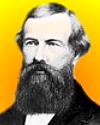 |  An American inventor (1811-1861) of the automatic safety brake for elevators made high-rise buildings practical. He strikingly demonstrated his safety brake at the Crystal Palace Exposition in New York in 1854. In front of a large crowd, he stood on an elevated platform raised on a rope. When he ordered the rope cut with an axe, the brake he invented prevented its fall.Can you name this inventor? An American inventor (1811-1861) of the automatic safety brake for elevators made high-rise buildings practical. He strikingly demonstrated his safety brake at the Crystal Palace Exposition in New York in 1854. In front of a large crowd, he stood on an elevated platform raised on a rope. When he ordered the rope cut with an axe, the brake he invented prevented its fall.Can you name this inventor? |
| Events | |
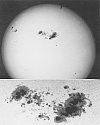 |  On 8 Apr 1947, a noteable sunspot group was observed on the sun's southern hemisphere. Its size was estimated at 7 billion square miles, or an area of 6100 millionths of the Sun's visible hemisphere. What was notable about this sunspot group? On 8 Apr 1947, a noteable sunspot group was observed on the sun's southern hemisphere. Its size was estimated at 7 billion square miles, or an area of 6100 millionths of the Sun's visible hemisphere. What was notable about this sunspot group? |
| On 8 Apr 1953, the first motion picture with a certain novel feature to be released by a major company, Man in the Dark, opened at the Globe Theater in New York City, starring Edmond O'Brien. (The idea, however was not new. It had been first used in the film, The Power of Love, made in the U.S. by a small company.) What was this feature first used by a major company? | |
| Answers |
When you have your answers ready to all the questions above, you'll find all the information to check them, and more, on the April 8 web page of Today in Science History. Or, try this link first for just the brief answers. Fast answers for the previous newsletter for April 7: flourine; reproduction without fertilization; Jacques-Alexandre-C�sar Charles; Mount Tombora; one ten-millionth part of the distance between the poles and the equator. |
| Feedback |
 If you enjoy this newsletter, the website, or wish to offer encouragement or ideas, please send feedback by using your mail reader Reply button. If you enjoy this newsletter, the website, or wish to offer encouragement or ideas, please send feedback by using your mail reader Reply button. |
--
If you do not want to receive any more newsletters, Unsubscribe
To update your preferences and to unsubscribe visit this link


Δεν υπάρχουν σχόλια:
Δημοσίευση σχολίου