 | TODAY IN SCIENCE HISTORY NEWSLETTER - 9 APRIL |
| Feature for Today |
| |
| Book of the Day | |
| |

| Quotations for Today | |
 | "While electric railroading is perhaps the most important branch of electrical engineering, at least as regards commercial importance, considering the amount capital invested therein, nevertheless it is a remarkable fact that while most other branches of electrical engineering had been developed to a very high degree of perfection, even a few years ago theoretical investigation of electric railroading was still conspicuous by its almost entire absence. All the work was done by some kind of empirical experimenting, that is, some kind of motor was fitted up with some gearing or some sort of railway car, and then run, and if the motor burned out frequently it was replaced with a larger motor, and if it did not burn out, a trailer was put on the car, and perhaps a second trailer, until the increase of the expense account in burn-outs of the motors balanced the increased carrying capacity of the train." - Charles Steinmetz, German-American electrical engineer and inventor who founded the General Electric laboratory (born 9 Apr 1865)  |
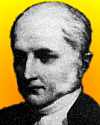 | "I had come to the conclusion, that the principal alimentary matters might be reduced to the three great classes, namely the saccharine, the oily and the albuminous." - William Prout, English biochemist and physiologist (died 9 Apr 1850) |
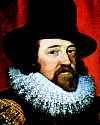 | "...those experiments be not only esteemed which have an immediate and present use, but those principally which are of most universal consequence for invention of other experiments, and those which give more light to the invention of causes; for the invention of the mariner's needle, which giveth the direction, is of no less benefit for navigation than the invention of the sails, which give the motion." - Sir Francis Bacon, English philosopher remembered for his influence promoting a scientific method (died 9 Apr 1626) |
| QUIZ | |
| Before you look at today's web page, see if you can answer some of these questions about the events that happened on this day. Some of the names are very familiar. Others will likely stump you. Tickle your curiosity with these questions, then check your answers on today's web page. | |
| Births | |
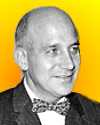 |  J(ohn) Presper Eckert, Jr., born 9 Apr 1919, was an American engineer and coinventor of the first general-purpose electronic computer, a digital machine that was the prototype for most computers in use today. In 1946, Eckert with John W. Mauchly fulfilled a government contract to build a digital computer to be used by the U.S. Army for military calculations. J(ohn) Presper Eckert, Jr., born 9 Apr 1919, was an American engineer and coinventor of the first general-purpose electronic computer, a digital machine that was the prototype for most computers in use today. In 1946, Eckert with John W. Mauchly fulfilled a government contract to build a digital computer to be used by the U.S. Army for military calculations. What was this computer named? What was this computer named? |
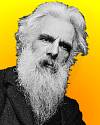 | Eadweard Muybridge, an English photographer, born 9 Apr 1830, is remembered for his pioneering work in photographic studies of motion. One notable example is his series of photographs of a running horse which answered what had been a hotly debated issue. What question about a horse's gait did Muybridge solve? |
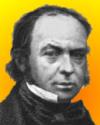 | Isambard Kingdom Brunel, an English civil and mechanical engineer, born 9 Apr 1806, had great originality and was highly productive. His outstanding projects include railways, tunnels, bridges, viaducts and steamships (including the first transatlantic steamer). What were the names of his three great steamships? |
| Deaths | |
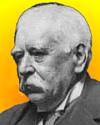 |  Sir Patrick Manson (1844-1922) was a Scottish parasitologist who founded the field of tropical medicine developing it as a distinct field of study. He was the first to discover (1877-79) that an insect can be host to a developing parasite (the worm Filaria bancrofti) that is the cause of a human disease (filariasis, which occurs when the worms invade body tissues).What was the insect responsible for transmission of this disease? Sir Patrick Manson (1844-1922) was a Scottish parasitologist who founded the field of tropical medicine developing it as a distinct field of study. He was the first to discover (1877-79) that an insect can be host to a developing parasite (the worm Filaria bancrofti) that is the cause of a human disease (filariasis, which occurs when the worms invade body tissues).What was the insect responsible for transmission of this disease? |
| Events | |
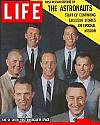 |  On 9 Apr 1959, NASA announced the selection of America's first seven astronauts for project Mercury, chosen from 110 applicants. NASA required astronaut candidates to be male, not older than 40 years of age, not more than 5' 11" height and in excellent physical condition. What are the names of four of these famous astronauts? Or, try for all seven names. On 9 Apr 1959, NASA announced the selection of America's first seven astronauts for project Mercury, chosen from 110 applicants. NASA required astronaut candidates to be male, not older than 40 years of age, not more than 5' 11" height and in excellent physical condition. What are the names of four of these famous astronauts? Or, try for all seven names. |
| Answers |
When you have your answers ready to all the questions above, you'll find all the information to check them, and more, on the April 9 web page of Today in Science History. Or, try this link first for just the brief answers. Fast answers for the previous newsletter for April 8: radioactive isotope carbon-14 as a tracer; the pituitary; Elisha Otis; largest sunspot group ever on record; 3D motion picture, viewed by the audience with spectacles having one red and one green lens to produce the illusion of depth. |
| Feedback |
 If you enjoy this newsletter, the website, or wish to offer encouragement or ideas, please send feedback by using your mail reader Reply button. If you enjoy this newsletter, the website, or wish to offer encouragement or ideas, please send feedback by using your mail reader Reply button. |
--
If you do not want to receive any more newsletters, Unsubscribe
To update your preferences and to unsubscribe visit this link


Δεν υπάρχουν σχόλια:
Δημοσίευση σχολίου