 | TODAY IN SCIENCE HISTORY NEWSLETTER - 10 MAY |
| Feature for Today |
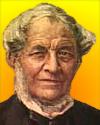 On 10 May 1860, German chemists, Robert Bunsen and Gustav Robert Kirchoff announced their the discovery of the new elements caesium and rubidium. On 10 May 1860, German chemists, Robert Bunsen and Gustav Robert Kirchoff announced their the discovery of the new elements caesium and rubidium.The following year, Bunsen published some further results of his work on compounds of these new elements. His paper (the original of which was in German) was summarized in the American Journal of Science (Nov 1861) labelled Caesium and Rubidium. Bunsen gave an account of how he managed to identify these as new elements by spectrum analysis. Though originally found in tiny amounts in the mineral waters of D�rkheim, he also found these new elements in lepidolite minerals. Thus he more easily obtained small quantities of compounds sufficient for laboratory testing. The article also explains how the names for Caesium and Rubidium were chosen. |
| Book of the Day | |
| |

| Quotations for Today | |
| | "In my own field, x-ray crystallography, we used to work out the structure of minerals by various dodges which we never bothered to write down, we just used them. Then Linus Pauling came along to the laboratory, saw what we were doing and wrote out what we now call Pauling's Rules. We had all been using Pauling's Rules for about three or four years before Pauling told us what the rules were." |
| | "Geology has its peculiar difficulties, from which all other sciences are exempt. Questions in chemistry may be settled in the laboratory by experiment. Mathematical and philosophical questions may be discussed, while the materials for discussion are ready furnished by our own intellectual reflections. Plants, animals and minerals, may be arranged in the museum, and all questions relating to their intrinsic principles may be discussed with facility. But the relative positions, the shades of difference, the peculiar complexions, whether continuous or in subordinate beds, are subjects of enquiry in settling the character of rocks, which can be judged of while they are in situ only." |
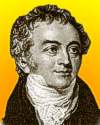 | "The nature of light is a subject of no material importance to the concerns of life or to the practice of the arts, but it is in many other respects extremely interesting." - English physicist in the quiz below (died 10 May 1829)  |
| QUIZ | |
| Before you look at today's web page, see if you can answer some of these questions about the events that happened on this day. Some of the names are very familiar. Others will likely stump you. Tickle your curiosity with these questions, then check your answers on today's web page. | |
| Births | |
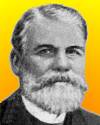 |  Fran�ois-Marie Raoult, born 10 May 1830, was a French chemist who formulated a law on solutions (called Raoult's law) which made it possible to determine an important property of the molecules of dissolved substances. Fran�ois-Marie Raoult, born 10 May 1830, was a French chemist who formulated a law on solutions (called Raoult's law) which made it possible to determine an important property of the molecules of dissolved substances. What is this property? What is this property? |
| | A French physicist, born on 10 May 1788, pioneered in optics and did much to establish the wave theory of light. His name is also well-known for the complex, ridged lenses used to project the light from lighthouses which are named after him.Can you name him? |
| Deaths | |
| |  An interesting English physicist (1773-1829) died on this day. Like the French scientist above, he also reinforced the wave theory of light with his study of interference of of light. But he also is known for his work with elasticity, and a an property of materials now uses his name with the word modulus.Can you name him? An interesting English physicist (1773-1829) died on this day. Like the French scientist above, he also reinforced the wave theory of light with his study of interference of of light. But he also is known for his work with elasticity, and a an property of materials now uses his name with the word modulus.Can you name him? |
| | Leonhard Fuchs was a German botanist (1501-1566) wrote books describing numerous plant species. Because of the significance of his work, later a shrub named after him. This shrub's flowers have a particular colour known by the same name, which has become part of our language, thus eternally memorializing this scientist.Can you name this shrub or flower? |
| Events | |
 |  On this day, the first planetarium in the U.S. opened to the public, the Adler Planetarium in Chicago, Illinois.In which decade was the planetarium opened? On this day, the first planetarium in the U.S. opened to the public, the Adler Planetarium in Chicago, Illinois.In which decade was the planetarium opened? |
| On 10 May 1860, the discovery of caesium, a new element, was announced by Robert Bunsen and Gustav Robert Kirchoff to the Berlin Academy of Scientists. They isolated it to identify what element was producing certain lines in a spectrum analysis. The element was named for the colour of these lines.What was the colour of its most characteristic spectral lines? | |
| In 1852, the theory of valence was announced by an English chemist. The valence explains that any atom can combine with a certain, limited number of other atoms. This is a fundamental consideration for chemical structure. It is known simply as the "theory of valence", rather than "so-and-so's theory," so his name is not heard much, even though his work earned him a knighthood.Can you name this man? | |
| Answers |
When you have your answers ready to all the questions above, you'll find all the information to check them, and more, on the May 10 web page of Today in Science History. Or, try this link first for just the brief answers. Fast answers for the previous newsletter for May 9: Howard Carter; drawing antiquities; the speed of light; when gases combine their relative volumes bear a simple numerical relation to each other (e.g., 1:1, 2:1) and to their gaseous product (under constant pressure and temperature); eyes; the Hindenburg zeppelin; stethoscope. |
| Feedback |
 If you enjoy this newsletter, the website, or wish to offer encouragement or ideas, please send feedback by using your mail reader Reply button. If you enjoy this newsletter, the website, or wish to offer encouragement or ideas, please send feedback by using your mail reader Reply button. |
--
If you do not want to receive any more newsletters, Unsubscribe
To update your preferences and to unsubscribe visit this link


Δεν υπάρχουν σχόλια:
Δημοσίευση σχολίου