 | TODAY IN SCIENCE HISTORY NEWSLETTER - 11 MAY |
| Feature for Today |
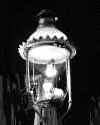 On 11 May 1825, the New York Gas Company began laying cast iron pipes in Broadway, New York, from Canal Street to the Battery. The city streets had been previously lit with whale-oil lamps. On 11 May 1825, the New York Gas Company began laying cast iron pipes in Broadway, New York, from Canal Street to the Battery. The city streets had been previously lit with whale-oil lamps. New York became the third U.S. city with gas street lights, after Baltimore (1817) and Boston (1822). In this extract, Gas Lighting in New York, from Cradle Days of New York (1909), compared to candles in house windows or oil lamps, the decision was stated as "the cleanliness, the beauty and the convenience of the gas over any other light is the principal cause of its being preferred, without reference to expense." [Image: street gas light in Baltimore, c.1920-30.] |
| Book of the Day | |
| |


| Quotations for Today | |
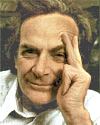 | "But the most impressive fact is that gravity is simple. It is simple to state the principles completely and not have left any vagueness for anybody to change the ideas of the law. It is simple, and therefore it is beautiful. It is simple in its pattern. I do not mean it is simple in its action—the motions of the various planets and the perturbations of one on the other can be quite complicated to work out, and to follow how all those stars in a globular cluster move is quite beyond our ability. It is complicated in its actions, but the basic pattern or the system beneath the whole thing is simple. This is common to all our laws; they all turn out to be simple things, although complex in their actual actions." |
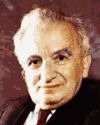 | "Scientists study the world as it is, engineers create the world that never has been." |
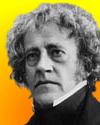 | "Every student who enters upon a scientific pursuit, especially if at a somewhat advanced period of life, will find not only that he has much to learn, but much also to unlearn." - John Herschel, English astronomer, chemist and chemist (died 11 May 1871)  |
| QUIZ | |
| Before you look at today's web page, see if you can answer some of these questions about the events that happened on this day. Some of the names are very familiar. Others will likely stump you. Tickle your curiosity with these questions, then check your answers on today's web page. | |
| Births | |
| |  Richard P. Feynman, born 11 May 1918, was an American physicist who was probably the most brilliant, influential and iconoclastic figure in his field. At age 24, during World War II, he joined the Manhattan project making the atomic bomb at Los Alamos. His lifelong interest was subatomic physics, and his simple diagrams used as a notation to describe the complex behaviour of subatomic particles are named after him. He was a devoted lecturer to his students. When the space shuttle Challenger explosion was being investigated by a Congressional committee, he made a simple demonstration in front of them to show the low temperature problem with rubber seals. Richard P. Feynman, born 11 May 1918, was an American physicist who was probably the most brilliant, influential and iconoclastic figure in his field. At age 24, during World War II, he joined the Manhattan project making the atomic bomb at Los Alamos. His lifelong interest was subatomic physics, and his simple diagrams used as a notation to describe the complex behaviour of subatomic particles are named after him. He was a devoted lecturer to his students. When the space shuttle Challenger explosion was being investigated by a Congressional committee, he made a simple demonstration in front of them to show the low temperature problem with rubber seals. What was the simple demonstration he made to the Congressional committee? What was the simple demonstration he made to the Congressional committee? |
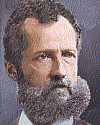 | Ottmar Mergenthaler, a German-American inventor (1954-1899), made what is regarded as the greatest advance in printing since the development of moveable type 400 years earlier. His invention was first used in 1886 by the New York Tribune.Can you name his invention? |
| Deaths | |
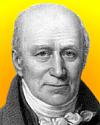 |  Thomas Andrew Knight (1759-1838) was a British botanist who experimented with the adaptive responses of plants and the changes in the direction of stem and root growth. These studies later became the basis of work on tropisms. He invented a device, named after him, to test the behaviour of germinating seeds subjected to forces other than gravity.Can you describe his device? Thomas Andrew Knight (1759-1838) was a British botanist who experimented with the adaptive responses of plants and the changes in the direction of stem and root growth. These studies later became the basis of work on tropisms. He invented a device, named after him, to test the behaviour of germinating seeds subjected to forces other than gravity.Can you describe his device? |
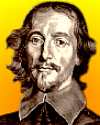 | Otto von Guericke (1602-1686) was a German physicist who studied the phenomenon of vacuum and the role of air in combustion and respiration. But to so this, he had to invent something first which was the first of its kind.Can you name this invention? |
| Events | |
 On this day in 1949, the first camera of a radically new line was sold for $89.95 in New York City. (Its name might remind you of some sunglasses.)What was this new kind of camera? On this day in 1949, the first camera of a radically new line was sold for $89.95 in New York City. (Its name might remind you of some sunglasses.)What was this new kind of camera? | |
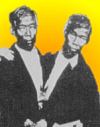 | In 1811, the famous twins Chang and Eng immigrated to the U.S. where they adopted the surname Bunker.From which country did they come? |
| Answers |
When you have your answers ready to all the questions above, you'll find all the information to check them, and more, on the May 11 web page of Today in Science History. Or, try this link first for just the brief answers. Fast answers for the previous newsletter for May 10: molecular weight; Augustin Jean Fresnel; Thomas Young; fuchsia; the decade including the year 1949; blue; Sir Edward Frankland. |
| Feedback |
 If you enjoy this newsletter, the website, or wish to offer encouragement or ideas, please send feedback by using your mail reader Reply button. If you enjoy this newsletter, the website, or wish to offer encouragement or ideas, please send feedback by using your mail reader Reply button. |
--
If you do not want to receive any more newsletters, Unsubscribe
To update your preferences and to unsubscribe visit this link


Δεν υπάρχουν σχόλια:
Δημοσίευση σχολίου